Showing posts with label Sustainability. Show all posts
Showing posts with label Sustainability. Show all posts
Tuesday, May 17, 2011
Looking for a Green College? Princeton Review Releases the 2011 Guide to Green Colleges
2011 release announcement of Princeton Review's Guide to 311 Green Colleges from U.S. Green Building Council on Vimeo.
This is really interesting! I guess the Green Movement has really caught on and become mainstream if we're seeing a guide to green focused colleges and universities partly brought to us by our friends at USGBC. So, if you and yours are looking for colleges to apply to with an environmental and socially responsible background this guide might be for you.

Wednesday, December 22, 2010
Reusing Keurig Single Serve K-Cups, A solution at last! And an innovation opportunity for GMCR!
Intrepid design innovators check out Kbrewlids a company which can help us all love coffee and the Keurig single brew system that much more. Thanks Plasticless.com for blogging about this first. See their blog post. Check out the end of this post for a crazy innovative idea I have about bringing a lifecycle process and mentality to the K-Cup Single Brewing System and the customer user experience.
Over Three Billion K-Cups in the Environment Next Year?
At this point you've seen them used in offices, grocery stores and at home. Next year Green Mountain Coffee Roasters will make another gazillion of them, actually about three (3) billion K-Cups. Based on 4th quarter sales of +/- 800 million units. which are responsible for 90% of GMCR's profits. You know you can't recycle plastic K-cups don't you? At least most of them. For the plastic ones there's not a recycling solution as of yet. Presently this is not good for landfills and our environment.
Maybe you use the Keurig system at home. (over 6% of you do these days in the US!) The food matter and plastic material used after a brew aren't compatible with recycling centers apparently, nor are they fully and truly compostable (yet!). At least as a stop-gap measure, now you can take matters in your own hands literally and repack your k-cups yourself with the coffee you love most using the reusable metal foil lid. One very bright spot is the debut of paper based delivery cups for the Celestial Seasooning GPublish Postreen Tea released earlier this fall. Perhaps it's the shape of things to come. But for now the vast majority of their product is made of plastic which is why reusing them with lids from companies like Krewlids is an interesting alternative to tossing them in the garbage.
It's an interesting idea. However, you can also use the Keurig reusable cup as well, it's called My K-Cup and it's available for $17.95 from Keurig. The reality of packing your own is you actually have to handle coffee. Remember when you used to pour coffee grounds into white coffee filters after you ground up your coffee beans?
You can go down memory lane and recreate that experience every day and get a little closer to your food and its production. Nothing is better than the smell of fresh ground coffee beans. It's what I remember most fondly about the original Green Mountain Coffee Roasters retail coffee shops around Vermont where I grew up as a kid. The sounds and smell of freshly roasted and ground coffee. Wow! It was dark and majestic in its olfactory wonder! But maybe not realistic to fully return to. But it was a lot of work and it took time.
The Challenges of Convenience
Perhaps what's most unique about the Keurig Single cup brewing systems is how easy it is to use them and their overall convenience. Like anything in life there's something gained and something lost with the onset of technological progress and convenience. In our time starved world your schedule wins in the ease of how well you make coffee one cup at a time. You lose with not seeing, feeling the reality of interacting with your food and the time it takes to make a good cup of joe. Losing sight of where your food comes from lessens ultimately our humanity I think. Our environment ultimately loses with the burden of all that plastic sitting in landfills.
Inventing a Lifecycle Process
I wonder if GMCR could buy Kbrewlids.com or companies like this and bring this sort of idea into their product lifecycle? Building on that, I have a design and production challenge for GMCR product development specialists and marketers, why not borrow from the Netflix DVD play and return "playbook" and enhance the Keurig Single Serve user experience by designing a continuous loop into the buying, recycling and reusing process? Customer loyalty and excitement is a key ingredient of why GMCR is so successful already and this would build upon that sustainability platform reinforcing positive good for the environment behavior.
If you want to pull those three billion plus K-cups out of the waste stream, why not develop a system developing beautiful and durable reusable k-cup box packaging with return shipping paid for by GMCR to make it easy to send your empty K-cups back to a regional manufacturing facility? There they could be reprocessed and sent to factories for reuse in the manufacturing process with the K-cups given a second, third and even more lease on life? Maybe if landfills charged for K-Cup disposal this would add incentive to shifting consumer and corporate behavior towards reuse.
Implementation of a Lifecycle Process
It could be built into the pricing. Already, we're paying a premium for our pre-packaged K-cups. Trust me you don't want to compare the cost per serving of traditional coffee brewed from a pot and K-cups. K-cups are maybe competitive with buying coffee at coffee houses on the way to and from work, but not with brewing coffee at home.
While, you're paying a lot for the convenience already, the hidden costs are the elephant in the room. The hidden environmental costs of having all of that waste plastic around afterwards for generations and the petroleum it takes to make them in the beginning is an aspect not often discussed. Imagine trying to calculate the physical volume of the 3 billion estimated K-Cups to be produced next year and the impact on the environment, landfills and the amount of Oil? Given how much air there would be between each piled K-Cup a cubic foot of them wouldn't contain as many as you might think. It can't be good.
I know this lifecyle idea would add tons of complication to manufacturing and processing, reprocessing and maybe it's an impossible business idea. But why not try? We would only all benefit? Not only now but for generations to come. We're used to sending our DVD's back to Netflix or at least we did until we jumped onto the streaming Netflix bandwagon. You can't stream coffee like you can video....at least not yet. Another example is Toner exchange at your place of business. It was inconceivable a generation ago but here we are doing this.
With all challenges there are opportunities to innovate
Here it would be inventing and investing into an reuse and recycling infrastructure. But given the market strength of Coffee Roasters I bet there would be any number of smaller companies and vendors willing to develop and provide these kind of services and help move along this reuse process. I think GMCR has everything thing to gain and nothing really to lose in the trying. It's either this sort of idea or figuring out how to make the cups fully compost-able and/ or recyclable. I'm not sure which is easier.
Even if this kind of idea didn't work out I bet some other user experience innovations would result we can't even imagine! I know it's a well overused cliche but we've figured out how to go to the moon, we can figure out to create an effective and competitive K-Cup lifecycle loop and make it a win win for all! I want to continue to love GMCR for what it does best, make great sustainable coffee products.
In the meanwhile, using reusable lids seems like a great first step. If I were GMCR I would figure out how to do this well and bring it into the product family. Or other outside companies will on their behalf. That would be a lot of coffee and market share not made by Coffeeroasters and their affiliated companies in the not to distant future. Simultaneously I'd suggest working really hard to roll-out the paper based (hopefully) compostable K-Cups. It's great to start with Green Tea but let's see them used with Coffee.
I think it's a better business choice to innovate and create new markets and services while strengthening sales and reinforcing sustainable behaviors.
Over Three Billion K-Cups in the Environment Next Year?
At this point you've seen them used in offices, grocery stores and at home. Next year Green Mountain Coffee Roasters will make another gazillion of them, actually about three (3) billion K-Cups. Based on 4th quarter sales of +/- 800 million units. which are responsible for 90% of GMCR's profits. You know you can't recycle plastic K-cups don't you? At least most of them. For the plastic ones there's not a recycling solution as of yet. Presently this is not good for landfills and our environment.
Maybe you use the Keurig system at home. (over 6% of you do these days in the US!) The food matter and plastic material used after a brew aren't compatible with recycling centers apparently, nor are they fully and truly compostable (yet!). At least as a stop-gap measure, now you can take matters in your own hands literally and repack your k-cups yourself with the coffee you love most using the reusable metal foil lid. One very bright spot is the debut of paper based delivery cups for the Celestial Seasooning GPublish Postreen Tea released earlier this fall. Perhaps it's the shape of things to come. But for now the vast majority of their product is made of plastic which is why reusing them with lids from companies like Krewlids is an interesting alternative to tossing them in the garbage.
It's an interesting idea. However, you can also use the Keurig reusable cup as well, it's called My K-Cup and it's available for $17.95 from Keurig. The reality of packing your own is you actually have to handle coffee. Remember when you used to pour coffee grounds into white coffee filters after you ground up your coffee beans?
You can go down memory lane and recreate that experience every day and get a little closer to your food and its production. Nothing is better than the smell of fresh ground coffee beans. It's what I remember most fondly about the original Green Mountain Coffee Roasters retail coffee shops around Vermont where I grew up as a kid. The sounds and smell of freshly roasted and ground coffee. Wow! It was dark and majestic in its olfactory wonder! But maybe not realistic to fully return to. But it was a lot of work and it took time.
The Challenges of Convenience
Perhaps what's most unique about the Keurig Single cup brewing systems is how easy it is to use them and their overall convenience. Like anything in life there's something gained and something lost with the onset of technological progress and convenience. In our time starved world your schedule wins in the ease of how well you make coffee one cup at a time. You lose with not seeing, feeling the reality of interacting with your food and the time it takes to make a good cup of joe. Losing sight of where your food comes from lessens ultimately our humanity I think. Our environment ultimately loses with the burden of all that plastic sitting in landfills.
Inventing a Lifecycle Process
I wonder if GMCR could buy Kbrewlids.com or companies like this and bring this sort of idea into their product lifecycle? Building on that, I have a design and production challenge for GMCR product development specialists and marketers, why not borrow from the Netflix DVD play and return "playbook" and enhance the Keurig Single Serve user experience by designing a continuous loop into the buying, recycling and reusing process? Customer loyalty and excitement is a key ingredient of why GMCR is so successful already and this would build upon that sustainability platform reinforcing positive good for the environment behavior.
If you want to pull those three billion plus K-cups out of the waste stream, why not develop a system developing beautiful and durable reusable k-cup box packaging with return shipping paid for by GMCR to make it easy to send your empty K-cups back to a regional manufacturing facility? There they could be reprocessed and sent to factories for reuse in the manufacturing process with the K-cups given a second, third and even more lease on life? Maybe if landfills charged for K-Cup disposal this would add incentive to shifting consumer and corporate behavior towards reuse.
Implementation of a Lifecycle Process
It could be built into the pricing. Already, we're paying a premium for our pre-packaged K-cups. Trust me you don't want to compare the cost per serving of traditional coffee brewed from a pot and K-cups. K-cups are maybe competitive with buying coffee at coffee houses on the way to and from work, but not with brewing coffee at home.
While, you're paying a lot for the convenience already, the hidden costs are the elephant in the room. The hidden environmental costs of having all of that waste plastic around afterwards for generations and the petroleum it takes to make them in the beginning is an aspect not often discussed. Imagine trying to calculate the physical volume of the 3 billion estimated K-Cups to be produced next year and the impact on the environment, landfills and the amount of Oil? Given how much air there would be between each piled K-Cup a cubic foot of them wouldn't contain as many as you might think. It can't be good.
I know this lifecyle idea would add tons of complication to manufacturing and processing, reprocessing and maybe it's an impossible business idea. But why not try? We would only all benefit? Not only now but for generations to come. We're used to sending our DVD's back to Netflix or at least we did until we jumped onto the streaming Netflix bandwagon. You can't stream coffee like you can video....at least not yet. Another example is Toner exchange at your place of business. It was inconceivable a generation ago but here we are doing this.
With all challenges there are opportunities to innovate
Here it would be inventing and investing into an reuse and recycling infrastructure. But given the market strength of Coffee Roasters I bet there would be any number of smaller companies and vendors willing to develop and provide these kind of services and help move along this reuse process. I think GMCR has everything thing to gain and nothing really to lose in the trying. It's either this sort of idea or figuring out how to make the cups fully compost-able and/ or recyclable. I'm not sure which is easier.
Even if this kind of idea didn't work out I bet some other user experience innovations would result we can't even imagine! I know it's a well overused cliche but we've figured out how to go to the moon, we can figure out to create an effective and competitive K-Cup lifecycle loop and make it a win win for all! I want to continue to love GMCR for what it does best, make great sustainable coffee products.
In the meanwhile, using reusable lids seems like a great first step. If I were GMCR I would figure out how to do this well and bring it into the product family. Or other outside companies will on their behalf. That would be a lot of coffee and market share not made by Coffeeroasters and their affiliated companies in the not to distant future. Simultaneously I'd suggest working really hard to roll-out the paper based (hopefully) compostable K-Cups. It's great to start with Green Tea but let's see them used with Coffee.
I think it's a better business choice to innovate and create new markets and services while strengthening sales and reinforcing sustainable behaviors.
Tuesday, December 21, 2010
Harder Working Homes - Some 2011 Home Design Trends

What does next year hold for homeowners, residential building and design professionals? Well there's good news for the remodeling side of the equation. Not so good news yet for new residential construction of various kinds. However, in general, smaller is better with a strong focus on green and sustainable design features with better organized , downsized spaces. Excessive square footages and volumes are diminishiing in importance, replaced with a focus on pragmatism and quality.
In a press release sent out today, Harvard Graduate School of Design, Joint Center for Housing Studies (www.jchs.harvard.edu) predicts "substantive growth in remodeling spending, coming off of a three decline, seems likely according to the Leading Indicator of Remodeling Activity (LIRA) released today by the Remodeling Futures Program."
The indicator "estimates current quarterly and future home expenditures by homeowners." Kermit Baker, the JCHS program director is also the AIA Chief Economist who assembles quarterly reports on the residential design and construction industry. The AIA's recent reports also reinforce the growth in remodeling. See the referenced AIA graph indicating how remodeling in general is strongest out of all the residential categories tracked. Among them remodeling kitchens and baths outpace other aspects of remodeling and alterations while other types of new residential construction countrywide remain in the negative.
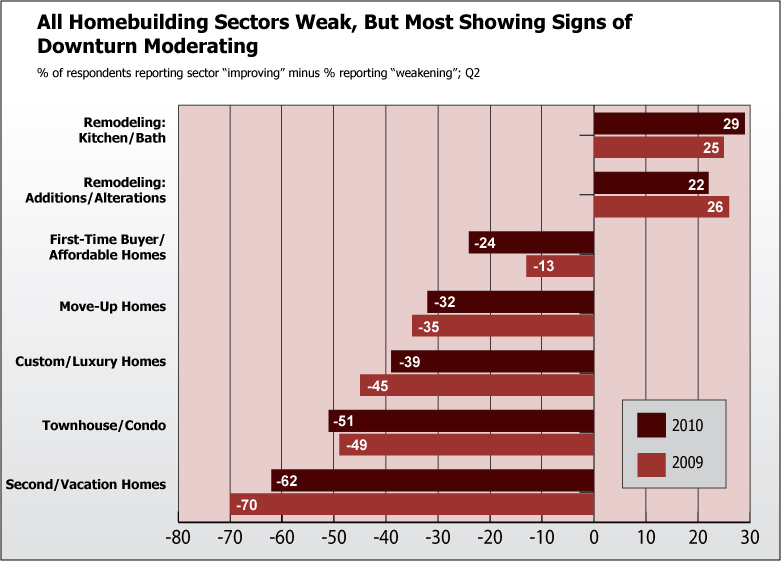
Harder working homes
Homes are working harder than ever before. With so many people going through work/life transitions, going back to school, the home office has become the most important special space followed by outdoor areas like porches, terraces and outdoor rooms, then mudrooms. Home offices and expanded flexible use outdoor
Friday, October 29, 2010
Supporting Clean Energy_A Vermont Perspective
Here's a video I posted to the RePower America Wall about supporting Clean Energy. Like I said in the video below I see here in Vermont all around me communities shifting away from dependence on fossil fuels and foreign oil to renewable, clean sources. Shifting towards cleaner sources both benefits our local environment and promotes green jobs in our local communities. Many Vermont companies now manufacture, install and consult on bringing clean energy, whether solar, wind, geothermal, biomass into Vermont homes, businesses and institutions. By doing so we ensure a more stable and sustainable way of life for generations to come.
For more information about the impact of renewable energy here in Vermont I urge you to click on this link to the Renewable Energy Vermont website and it's sister entity, Efficiency Vermont, an energy efficiency utility working to bring energy efficiency and conservation deeper into households and businesses around our small state. Another resource is the Vermont Sustainable Jobs Fund, an organization dedicated to shifting Vermont towards clean energy and green jobs.
What's great about Vermont is while we may be small, we have big ideas and a track record others can learn from on their journey towards shifting away from fossil fuel dependence towards clean energy and building stronger local communities. Check us out for best practices on how to do this. Contact me if you'd like more information from any of these resources or if you're considering adding renewable energy sources to your building project. I can help or if not, I will find someone who can.
Saturday, June 5, 2010
(Slow) Green
Awareness of our actions and consequences
We are awakening at last
Reading and seeing catastrophic oily substances surrounds us on the news
Chocking shorelines, habitats, livelihoods and communities
Illuminating our dependence upon oil and other fossil fuels
Revealing tragic vulnerabilities
Intensifying resolve to change behaviors
To finally make a difference
Stemming from another time and place
A different set of rules and natural patterns
No longer valid or reliable
Instead a changed world behaves unexpectedly
The idea of growth for growth's sake so anachronistic
Replaced by the need to think smaller, leaner and self-sufficient
Embracing a changed natural world
A difficult sickened place needing productive cultivation
A multi-generational effort awaits, so daunting
Achievable if together we set one foot in front of another
Beginning on the slow journey to a sustainable future
No longer just a few, but now a motivated many.
We are awakening at last
Reading and seeing catastrophic oily substances surrounds us on the news
Chocking shorelines, habitats, livelihoods and communities
Illuminating our dependence upon oil and other fossil fuels
Revealing tragic vulnerabilities
Intensifying resolve to change behaviors
To finally make a difference
Stemming from another time and place
A different set of rules and natural patterns
No longer valid or reliable
Instead a changed world behaves unexpectedly
The idea of growth for growth's sake so anachronistic
Replaced by the need to think smaller, leaner and self-sufficient
Embracing a changed natural world
A difficult sickened place needing productive cultivation
A multi-generational effort awaits, so daunting
Achievable if together we set one foot in front of another
Beginning on the slow journey to a sustainable future
No longer just a few, but now a motivated many.
Monday, December 14, 2009
Green Headquarters Delivers 375% ROI for SAS Canada
I read today in the second digital edition of HQ, a collaboration between McGraw-Hill and Architectural Record some interesting articles. One article on HQ was about how SAS Canada's headquarters which turned four recently has been a very good financial investment and on other levels too.
Please see the link to the article originally published on Canada Newswire. Please comment!
I'm always on the hunt for information about the effectiveness of green building and sustainability on workplace design / business performance.
Here's also a link to a digital version of the first inaugural issue as well.
Monday, November 23, 2009
Images of the Imaginary City and Waste Oil


A few years ago I painted this blue on blue image of any imaginary city with various levels of clarity. It's haunting blue coloration has stayed with me with it's simplicity and striking mood. When I was making it I was imagining how I felt during 9/11 which certainly wasn't very settled or happy, but rather downcast and confused, although now I can see I was trying to structure and control the uncontrollable with a composition of four figures against the sky.
Contrast this with the following more expressive painting of oil cans I made demonstrating the alternative and eirie beauty of painted words found on oil cans in Rutland, VT leaning against a Garage wall. I wanted to create a message with the piece causing the viewer to reflect on the
idea of beauty from such a ordinary and ugly fixture of our oil dependent society.
What are your thoughts or readings?
Sunday, November 1, 2009
DOE Solar Decathalon Winners_Let the Sun Shine on Innovation
When I was in graduate school in the the early 1990's sustainable design was just getting off of the ground in the way we know it now. (I know it's been around since Mesa Verde, but the current generation of thinking)
I wish programs such as the Solar Decathalon held each year in the fall in Washington D.C. were around then. It is sponsored by the US Dept of Energy and teams from universities and colleges from all across the world compete in it. It provides an oppourtunity for pursuing design innovation and experiential learning on a small solar home scale. What a fantastic all around oppourtunity!
The program has six-goals worth noting. The basic premise is to invigorate interest, research and developing marketable technologies able to be brought to the market-place. Another one is to help develop zero energy homes which is something many of us want to know more about.
The winners this year, especially the top three, offer a wide ranging view of how to solve the design challenge. Check out the winners! I wonder if teams from Norwich University or Yestermorrow Design Build School have ever entered? It seems like this program would be right up their respective areas of focus. I'll have to check with friends who teach there.
See photostreams of the homes on Flickr and Hi-res Gallery of Homes on the DOE site.
Enjoy seeing what the next generation of design leaders are up to!
I wish programs such as the Solar Decathalon held each year in the fall in Washington D.C. were around then. It is sponsored by the US Dept of Energy and teams from universities and colleges from all across the world compete in it. It provides an oppourtunity for pursuing design innovation and experiential learning on a small solar home scale. What a fantastic all around oppourtunity!
The program has six-goals worth noting. The basic premise is to invigorate interest, research and developing marketable technologies able to be brought to the market-place. Another one is to help develop zero energy homes which is something many of us want to know more about.
The winners this year, especially the top three, offer a wide ranging view of how to solve the design challenge. Check out the winners! I wonder if teams from Norwich University or Yestermorrow Design Build School have ever entered? It seems like this program would be right up their respective areas of focus. I'll have to check with friends who teach there.
See photostreams of the homes on Flickr and Hi-res Gallery of Homes on the DOE site.
Enjoy seeing what the next generation of design leaders are up to!
Thursday, September 3, 2009
Ecological Intelligence and the Good Guide_Parallels to Design and Architecture

Earlier this week I listened to a Treehugger Radio Interview of Daniel Goleman, Author of the new book Ecological Intelligence and the key issues surrounding the book advocating greater transparency about the food and products which we use everyday. He also advocates for a systemic view of nature, health concerns, environmental and societal or cultural concerns. He advocates for greater transparency and life cycle assessment by companies to provide missing information to complete the puzzle of "how Green is my organic cotton bag anyway?" etc. Time magazine recently said his was one of the top 10 ideas. It was world changing Idea number 10.
As a green architect I often want to know more about the products and materials we use on our building projects, especially if we're doing a LEED certified Green Building and to tell you the truth there doesn't seem to be much discussion in architectural practice about Life Cycle Assessment in parallel with the LEED Green Building process.
------------
I think this is a missed oppourtunity, or one in it's beginning stages of integration and development. Daniel Goleman was extremely persuasive especially in relation to the products we touch everyday, eat, drink, wear, drive, ride on etc. He mentioned a website called the Good Guide which examines the three major categories identified above, scores them seperately and then averaged overall. I visited the site and was it easy to use. I looked up cold cereal and it was fascinating! I'm going to buy Dora the Explorer Cereal, surpisingly well-rated.
----- That's in comparison to the unwieldy unfriendly data driven techy interfaces available through the USGBC's website for LCA tools and links. I challenge the Building design community to make a LCA system as simple and helpful to use as Good Guide's. It would so help us in our efforts to confirm the viability of material and systems selections in our projects. The last thing I want to do is fill out wonky forms and track down myriad details about products in a spreadsheet application.
------Industry should work with independent third party vendors like Good Guide and others such as EcoLect.net and more, put their information out there for all to see in a transparent and easily accessible way. Companies which do this will no doubt be leaders and innovators in their field, and, find a great deal of profitability and market acceptance by being so open. What I like most about the criteria used by Good Guide is the big picture systems based approach to information. Clarity and ease of access, a beautiful interface are priceless for the designer who wants to be credible and authentic in offering clients "Green Choices" with backup behind them.
----I'm going to see if my local library can order Dan's book so I can check it out and so others can enjoy it too.
Wednesday, August 26, 2009
The New Energy Economy, Vermont and Colorado Parallels
Colorado Governor Bill Ritter at the 6th Annual American Renewable Energy Day (AREDAY) in Aspene last weekend recounted how he helped Barack Obama last year on the campaign trail to see the possibilities of a 'New Energy Economy' based on Colorado's success with it. Apparently it is due to 'marriage of sorts' between environmental and economic policy. He went on to discuss various success stories in the public and private sector since attaining office in 2006. His main focus was how to use the 'transition to clean energy as an economic engine'.
Last week Bernie Sanders chaired a Green Jobs Hearing in Montpelier, at the statehouse where he asked experts from private green oriented industry and similar Vermont public entities to speak about their work and vision integrating energy efficiency, sustainable energy and green jobs development together under the Green Collar economy umbrella. Sanders goal was to collect testimony to spread the word about clean energy job development policies happening in Vermont and how what we're doing is applicable for others nationwide.
Between Colorado and Vermont as green 'new energy economy' leaders there is a lot to learn other states can take away. The one thing that's hard to replicate however is the unique synergy of green thinking into the DNA of those who live and work in each State. This is partly due to long-held environmentally focused values, a culture awareness of the finitude of natural resources and willingness to have hard discussions together. Whether it's the lack of water for example in Colorado and rampant growth issues in metropolitan areas or stormwater versus acid rain in Vermont, aesthetic and visual impacts of Wind Energy vs. the Merits as renewable energy source and permitting reform, both States have a vital dialogue about these issues which spurs other conversations and intiatives such as the 'New Energy Economy' or 'Green Jobs' discussions.
This synergy of activism, involvement and innovation takes generations to develop. But with Colorado and Vermont's examples to follow among others, perhaps it might be easier for others to join in the conversation.
Last week Bernie Sanders chaired a Green Jobs Hearing in Montpelier, at the statehouse where he asked experts from private green oriented industry and similar Vermont public entities to speak about their work and vision integrating energy efficiency, sustainable energy and green jobs development together under the Green Collar economy umbrella. Sanders goal was to collect testimony to spread the word about clean energy job development policies happening in Vermont and how what we're doing is applicable for others nationwide.
Between Colorado and Vermont as green 'new energy economy' leaders there is a lot to learn other states can take away. The one thing that's hard to replicate however is the unique synergy of green thinking into the DNA of those who live and work in each State. This is partly due to long-held environmentally focused values, a culture awareness of the finitude of natural resources and willingness to have hard discussions together. Whether it's the lack of water for example in Colorado and rampant growth issues in metropolitan areas or stormwater versus acid rain in Vermont, aesthetic and visual impacts of Wind Energy vs. the Merits as renewable energy source and permitting reform, both States have a vital dialogue about these issues which spurs other conversations and intiatives such as the 'New Energy Economy' or 'Green Jobs' discussions.
This synergy of activism, involvement and innovation takes generations to develop. But with Colorado and Vermont's examples to follow among others, perhaps it might be easier for others to join in the conversation.
Interested in learning more?
You can find us now at www.arocordisdesign.com, the website of our Montpelier, Vermont-based residential architecture firm practice Arocordis Design. If you want to contact us there, click on this link.
#netzero #homedesign #arocordisdesign #vermont #vermontarchitect #architecture #climateaction
Friday, August 21, 2009
Does being or becoming Sustainable or Green benefit my business and bottom line?

Clients, Contractors and Business Partners often ask if becoming a more sustainable or green oriented organization is truly beneficial or just another buzzword which will fade in a year or so? It's a terrific question not be shied away from asking or answering. Based upon working with lots of public, private, for profit, non-profit customers I know the answer is evolving and relative to the situation of the business or organization asking. There is not one answer. First, do you have a set of core company values, a mission statement encompassing more than financial profits and success? If not, examine some Vermont examples where I live.
Working and growing up in Vermont I have luckily been exposed to some extraordinary companies with truly remarkable sustainable visions who have been models for others to follow over the last generation and mentors now for those following in their footsteps. Companies such as Ben & Jerry’s Homemade Ice Cream, King Arthur Flour, Seventh Generation, NRG Systems, Green Mountain Coffee Roasters, National Life of Vermont, Small Dog Electronics, Efficiency Vermont...the list goes on an on. Year after year they show remarkable performance and a large part of their success lies in the different way they run their businesses. Their success is driven by their focus on a triple bottom lined approach to seeing the world, of focusing on "People, Profits and Planet". They are active members of Vermont Businesses for Social Responsibility, a non-profit focusing on how businesses can accumulate social and environmental capital along with economic prosperity in Vermont.
Each one of these companies believes strongly in a socially responsible vision and are leaders in their industries. As successful as they are as businesses they also are often voted best places to work in Vermont, with lots of economic data supporting or reinforcing why it's beneficial to embrace sustainability. They have extremely dynamic and vibrant work cultures or communities with a strong sense of corporate identity and shared goals. In the cases where these companies publish Corporate Responsibility Reports, they measure among many factors worker productivity, quality and types of benefits, workplace comfort, relative health and wellness, absentism, community volunteerism. These measures go beyond the ordinary business performance factors often measured in traditional end of the year financial reports.
Secondly, to support the organizational aspects of the high performance workplace a critical physical step is to provide to employees a green, sustainably oriented building or office fit-out. To be a sustainable business I feel also means embracing green building fundamentals which directly impact worker comfort and well-being and indirectly help the environment, lower organizational exposure to fluctuating energy costs. Many companies and organizations over the last five or ten years have dramatically embraced the Green Movement and are no longer beginners but rather moving on to the second or third generation of integrating green building ideas into their workplaces. Seeing what works and what does not. In the process many have facilities which are LEED certified and are walking their talk in a very open and visible way.
Here is some information from the USGBC:
Benefits of Green Building & Sustainbility in Business (adapted from the
US Green Building Council [USGBC] website, See below
Environmental benefits:
1. Enhance and protect ecosystems and biodiversity
2. Improve air and water quality
3. Reduce solid waste
4. Conserve natural resources
Economic benefits:
1. Reduce operating costs
2. Enhance asset value and profits
3. Improve employee productivity and satisfaction
4. Optimize life-cycle economic performance
Health and community benefits:
1. Improve air, thermal, and acoustic environments
2. Enhance occupant comfort and health
3. Minimize strain on local infrastructure
4. Contribute to overall quality of life
Links:
Vermont Businesses for Social Responsibility
Winning Workplaces - Helping to create the High Performance Workplace
US Green Building Council - Facts for Businesses
(Disclosure, as a long term team member of Maclay Architects I have had the good fortune of working with NRG Systems, Seventh Generation and Efficiency Vermont, VBSR among others in various capacities, you can learn more about that work at our website)
Thursday, August 13, 2009
Google's PowerMeter Gadget - Take Control of Your Energy Use


When Dan Reicher was lecturing at Yestermorrow School in Warren, VT a few weeks ago he shared with us details of the Google's new PowerMeter gadget, freely available online. It is in the pilot program phase working in coordination with select utility partners. The PowerMeter hooks up to your electrical service fuse box in your home via a small reader which apparently costs $150 or so. It allows homeowners or business owners to monitor energy use in real time wirelessly within the home or by mobile phone.
Doing so enables energy consumers to monitor their energy use behaviors, what kinds of spikes happen when appliances turn on and off. It helps you understand how much your TV, computer or various plugged in appliances cost you. Conversely it shows you what happens when you shift your behavior. As Dan said in the lecture with one of his slides, "If you cannot measure it, you cannot improve it - Lord Kelvin"
This will be hopefully but one of many examples of collaborations between the energy industries and outside partners like Google. Similar to other viral, collaborative efforts perhaps behavior changing gadgets or add-ons will make a difference in our energy usage combined together with shifts to mainstream adoption of green building and energy efficiency practices.
There is strength in numbers. I just hope all of these efforts can reach a consensus of sorts on energy measurement integration standards so this is easy, transparent and effective. Not creation again of another set of closed or propietary systems which don't talk with each other all attempting to beat each other at the same energy use modification game. This also the kind of equipment which would be really cool for public and private buildings to have so building occupants, facility managers and the general public could see energy use on its own terms. It would be great for LEED buildings to be up on the Web hooked into the Google Gadget and kids could see how their Dorm building, classroom building etc. is doing and talk about it in class or work together in energy nerd conservation competitions to see who could reduce their energy use the most. In the process, kids and all involved would learn game changing behaviors to take into life beyond the campus, elementary, middle, or high school.
Gee whiz!
Subscribe to:
Posts (Atom)